Space Age: the retro-futuristic style of the 60s
We travel back in time aboard a space shuttle to the Space Age of the 1960s. An era that, with the advent of space travel, among other things, was looking to the future. What did the future look like in the 1960s? Bright, white and reflective. Take a look with us!

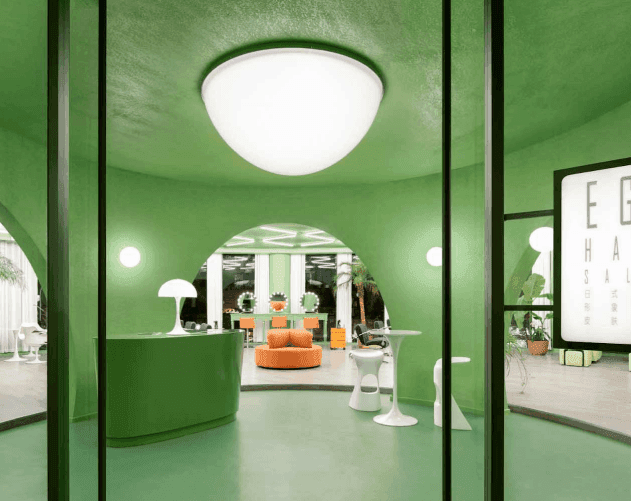
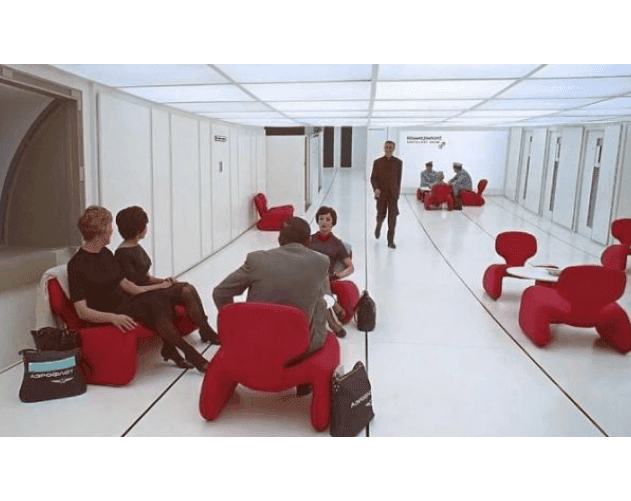
Space Age is the 1960s style that came out of the space race: when Sputnik 1 went up in 1957, designers started shaping lamps like spheres and UFOs and swapped dark, heavy furniture for light, cocoon-like forms in white, silver and reflective surfaces. The real engine was new plastics. Verner Panton's S chair, designed in 1959, was the first chair made entirely from a single piece of plastic, and it opened the door to the shapes I'd tell any Whoppah buyer to learn first: Eero Aarnio's fibreglass Ball chair, Joe Colombo's Elda lounge chair and the Sputnik lamps that copy the satellite's silhouette. I'll say it plainly: this is the one retro style that never looks dated to me, because it was designed to look like the future. Here's how to recognise it.
Where does Space Age design come from?
The Space Age was a period of dazzling developments in new space technologies, played out - literally - as a space race between America, principally, and the then Soviet Union. When the first satellite, Sputnik 1, took to the skies in 1957, a new era began. Space was seen as a place of innovation and future. This was also evident in the film, music, fashion and design industries.
For example, the spacesuit with its round helmet inspired fashion designers, but also industrial designers: lampshades in the shape of spheres and UFOs were a big hit. Dark furniture with abstract shapes gave way to light, spatial, cocoon-like forms, with lots of white, silver and reflective surfaces.
Why does Space Age furniture have such organic shapes?
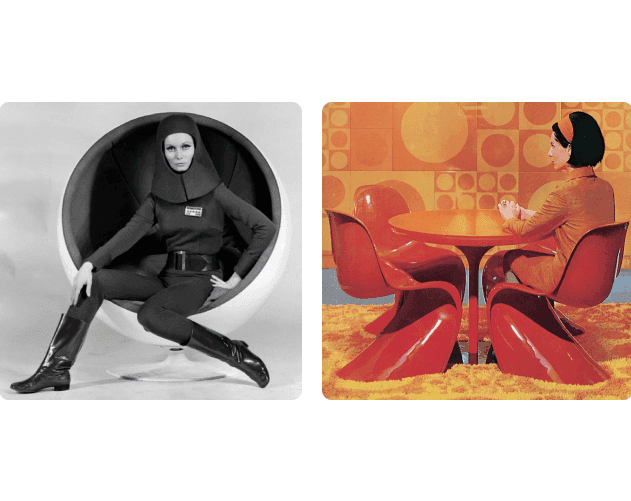
But it wasn't just the aesthetics of space that were imitated. The invention of new plastics really opened the doors of creativity for industrial designers, creating endless possibilities for form. Verner Panton's S chair, designed in 1959, is an example of progressive design from this period. It was the first chair made entirely from a single piece of plastic.
Other space-age classics include the Ball chair in fibreglass designed by Eero Aarnio, the Elda Lounge Chair designed by Joe Colombo and the Sputnik lamps, whose shape recalls that of the first satellite. All these creations - in terms of their materials and design - were aimed at the "future". And they have succeeded - these creations have been described as timeless.