Murano glass
Today, we take you on a trip to Murano in Italy to learn more about Murano glass. These beautiful hand-blown items have been a household name for centuries for their sophisticated designs and high quality. Today, glassware as decoration in your interiors is hip again. At Whoppah, you will find a whole host of Murano glassware - true works of art and utterly timeless. Discover the pure craftsmanship of Murano.

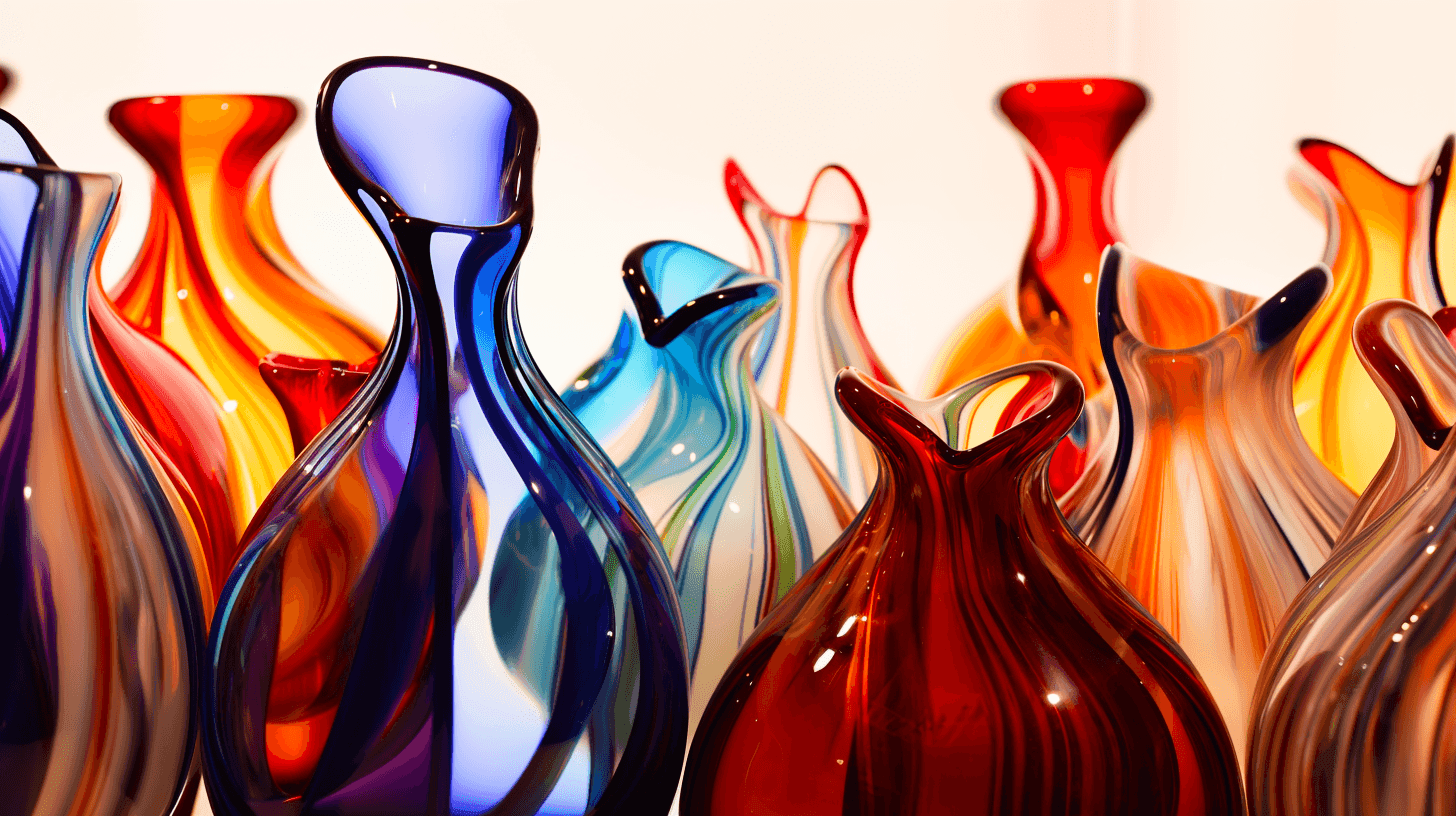
Murano glass is hand-blown glass from a cluster of seven small islands next to Venice, and it is one of the few decorative categories where the craft itself is the value: a 1295 law forbade glassblowers from leaving the island, and techniques such as filigrana, incalmo and sommerso were refined there for centuries. Every piece starts as silica sand, soda, lime and potassium melted in a furnace, then blown and shaped by hand, which is why no two vases are identical. On Whoppah I see Murano come through in every colour and era, and the names to know are Venini, Barovier & Toso, Seguso and Cenedese. This guide covers how the glass is made, the history of the island, and a collector's advice on telling the real thing from the mediocre glass that circulates.
What is Murano glass?
Glass making is one of the most complex crafts in the world. Glass masters have spent years working on various techniques that have passed from generation to generation. When you think of Murano glass, sand does not immediately come to mind, yet it is the basis of all glass production from Murano. Glass is made from a mixture of silica sand, soda, lime and potassium that is melted in a special furnace at Eem temperature of about 2700 degrees. When the mixture has become flexible, it is removed from the furnace with a pipe. The glass is blown out of the pipe while the glassmaker shapes and models it. The shape and colour depends on the tools and chemicals used. Murano glass is thus pure craft, which makes the product extra special.
Why is Murano glass made on the island of Murano?
In 1921, all glass blowers living in Venice were ordered to move to Murano. This was because the glass furnaces in Venice were causing devastating fires. Murano, a cluster of seven small nearby islands connected by bridges, was sealed off. This protected the city and the craft - the craft had to remain exclusive to Murano. In 1295, a law was even passed forbidding glassblowers from leaving the island. Despite this, they were treated as the island's most prominent citizens and enjoyed an elevated social status and lifestyle. With this isolation, the craft evolved, with many innovations and new techniques. In the 17th century, Murano glass entered a period of decline, due to Napoleon's 1797 conquest of Venice and his abolition of all guilds. By 1820, only five kilns were still producing glass. During the following decades, the industry revived and new glass firms were established.
Vendor Murano at Whoppah recounts:
"In 1990, I was in Murano for the first time. The beauty of glass art from Murano touched me so much then that collecting it became an addiction. Wandering around the island about four times a year, you get to know the people. I get behind the scenes with famous glass artists and talk to them about glass art, glass techniques and Italian food. The best-known glass houses are Venini, Barovier & Toso, Barbini, Toffolo, Segusto (since 1397), Signoretto, Tagliapietra, Nason, Zanetti, Cenedese and Ferro. All masters of various glass techniques such as tessuto, rubino, filigrana, pulegoso, incalmo and somerso. Want to buy Murano glass? There is mediocre glass in circulation, much of which comes from China. It is also sometimes falsely signed and dated. How do you know if you are buying high-quality glass? Read books on glass. In books on Murano glass by Heiremans, there are examples of signatures and labels used in the back."